


Starting culinary school and choosing a culinary school uniform is exciting, but it can also feel overwhelming.
You’re learning knife skills, kitchen safety, plating techniques, and professional discipline all at once. And before you even step into your first lab, there’s one decision every culinary student must make:
Choosing the right chef coat.
It may seem like a simple uniform requirement, but experienced chefs and instructors know the truth:
Your chef coat becomes your daily tool. The right coat helps you stay comfortable during long kitchen labs, maintain professionalism, and build confidence as you transition from student to chef.
In this guide, we’ll help you understand:
- What culinary schools actually require
- What students should look for in a chef jacket
- Common mistakes first-year students make
- Why quality matters (even on a student budget)
- The best chef coat brands designed for culinary students
Why Your Chef Coat Matters More Than You Think
Every culinary student begins with the same goal:
To become a confident, professional chef.
But early on, students face real challenges:
External Problem
They need uniforms that meet school requirements and survive daily kitchen work.
Internal Problem
They want to feel like they belong in a professional kitchen, not like beginners wearing uncomfortable gear.
Philosophical Problem
If students are expected to perform like professionals, they deserve equipment designed for professionals.
Your chef coat sits at the center of all three.
What Culinary Schools Actually Require (And Why)
Most culinary programs enforce strict dress codes aligned with industry standards. Students are typically required to wear:
- White, long-sleeve chef jacket
- Chef pants
- Apron
- Hat or hair covering
- Slip-resistant shoes
Professional programs emphasize that uniforms protect students while maintaining sanitation and professionalism in kitchen environments.
Many schools specifically require:
- Long sleeves for burn protection
- Double-breasted jackets to hide stains quickly
- Clean, pressed appearance at all times
This isn’t about appearance alone; it’s about safety, discipline, and preparing students for real restaurant standards.
In fact, some programs recommend students own multiple chef coats to rotate during intensive lab schedules.
The Real Challenges Culinary Students Face
Here’s what many first-year students discover quickly:
1. Kitchens Are Hot... Really Hot
You’ll spend hours near ovens, burners, and steam.
Poorly designed coats trap heat and moisture, making learning harder than it needs to be.
2. Laundry Happens Constantly
Chef coats are washed frequently. Low-quality fabrics tend to fade, shrink, or lose their shape quickly.
3. Movement Matters
You’re bending, reaching, lifting, and plating nonstop.
Rigid jackets restrict motion and create fatigue.
4. Professional Confidence Counts
Students often say the moment they feel like a chef is the moment they wear a coat that fits correctly.
A great coat doesn’t just meet requirements; it changes mindset.
What to Look for in a Chef Coat as a Student
Before choosing a brand, understand the features that truly matter to you.
✔ Breathable Fabric
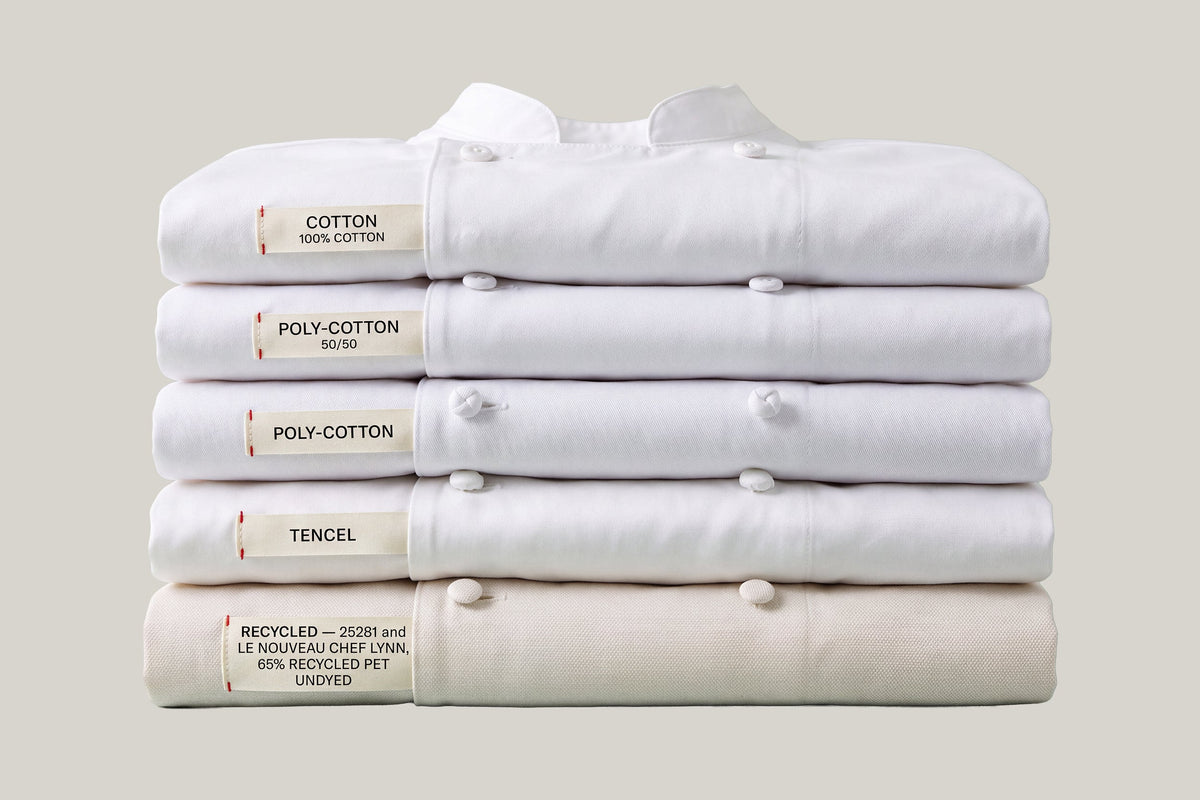
Modern culinary jackets use cotton blends or advanced fibers to improve airflow while maintaining durability.
✔ Double-Breasted Design
Allows students to reverse panels and maintain a clean appearance during service.
✔ Durability
Chef coats endure repeated washing and high-heat environments.
✔ Functional Details
Look for:
- Thermometer pockets
- Hidden closures
- Reinforced seams
- Adjustable cuffs
✔ Professional Fit Options
Many programs now encourage gender-specific or modern fits for comfort and confidence.
Why Quality Matters (Even for Students)
Students often try to save money by purchasing the cheapest coat available.
But here’s what typically happens:
- Fabric becomes thin after repeated washing
- Buttons fail mid-semester
- Heat retention increases fatigue
- Replacement costs add up
A slightly higher-quality coat often lasts through school and into your first job.
That’s why many culinary programs partner with uniform providers who understand student needs.
The Guide: Choosing Trusted Brands Designed for Culinary Education
At United Uniforms, the goal isn’t simply to sell uniforms.
It’s helping students start their culinary journey with gear designed for real kitchens.
Two brands consistently stand out for culinary students:
Both offer professional-grade craftsmanship with student-friendly practicality.
Common Mistakes Students Make When Buying Chef Coats
❌ Buying Only One Coat
You’ll need backups during laundry cycles.
❌ Ignoring Fit
Oversized coats reduce mobility and professionalism.
❌ Choosing Style Over Function
Breathability and durability matter more than appearance alone.
❌ Waiting Until Classes Start
Uniform delays can prevent students from participating in labs.
The Plan: How to Choose the Right Chef Coat in 3 Steps
Step 1: Confirm School Requirements
Check sleeve length, color, embroidery rules, and approved vendors.
Step 2: Choose a Professional Brand
Select trusted brands like Segers or Kentaur designed for culinary environments.
Step 3: Order Through a Culinary Program Provider
Ensure sizing support, program compatibility, and reliable fulfillment.
Start here:
When students choose the right chef coat:
- They feel prepared on day one
- They stay comfortable during long labs
- They meet professional standards confidently
- They focus on learning and not adjusting to uncomfortable uniforms
The chef coat becomes a symbol of progress. From a nervous beginner to a confident culinary professional.
Why United Uniforms Is the Right Guide
United Uniforms helps culinary programs and students by providing:
- School-approved uniform solutions
- Professional culinary brands
- Reliable ordering for student groups
- Quality options aligned with real kitchen needs
Instead of guessing what to buy, students get clarity and confidence from the start.
Your Next Step
If you’re preparing for culinary school or managing uniforms for a culinary program, start with solutions built specifically for students.


Share:
200 Employees. One Brand. Or None.
Understanding the Impact of Professional Hotel Staff Uniforms