

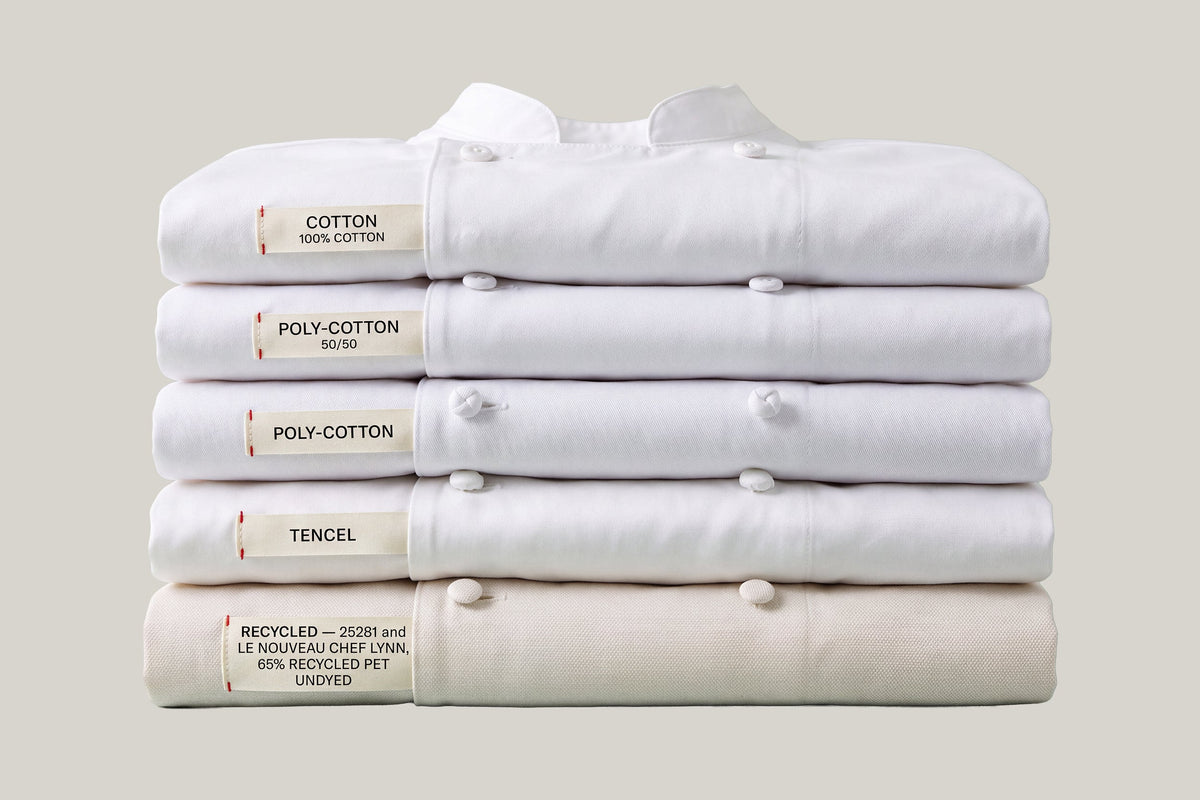
Procurement in the culinary industry often fails when buyers prioritize aesthetic keywords like "breathable" or "stain-resistant" over critical technical specifications.
In our experience as an apparel consultant, a successful uniform program is not built on style alone, but on a deep understanding of fiber morphology and thermal ratings. Every search for a cooling coat eventually comes back to the spec sheet: fiber character, fabric weight, and laundry compatibility.
Professional garments typically fall within a weight range of 180 to 215 g/m². Understanding this benchmark is vital for durability planning: a lighter 180 g/m² fabric offers superior cooling for a high-heat line but will wear out significantly faster than a 215 g/m² garment, which provides the necessary structure for executive roles. To optimize your investment, look past the brand and analyze the "failure mode" of the textile itself.
1. The Bleach Paradox: A Legacy of Aesthetic Destruction
A persistent industry myth is that bleach is the best friend of a white chef coat. In reality, chlorine is the primary agent of garment failure. While it physically weakens cotton fibers over time, its effect on the polyester blends that dominate modern kitchens is a "Paradox" of cleaning: the chemical intended to whiten actually causes irreversible aesthetic destruction.
"Never bleach a white chef coat. Chlorine attacks the polyester in a blend and leaves a yellow cast that no amount of rewashing corrects, and it weakens cotton fiber at the same time."
Once the polyester in a blend—like the 65/35 ratio found in the Segers 1603 is yellowed by chlorine, the garment is effectively a total loss for guest-facing roles. No amount of rewashing or optical brighteners can restore a "bleach-burned" coat to a true white.
2. Tencel: The "Wood-to-Wear" Moisture Miracle
When polished appearance and reliable thermal comfort are both essential, Tencel (Lyocell) stands out as a transformative fabric choice for the industry. Derived from wood pulp through a closed-loop process, Lyocell performs well because of its unique moisture-handling properties. While cotton is prized for absorption, it often holds moisture within the fiber, leading to a heavy, clammy sensation during a mid-service rush.
In contrast, Tencel moves moisture along its smooth fiber surface, allowing it to evaporate rapidly.
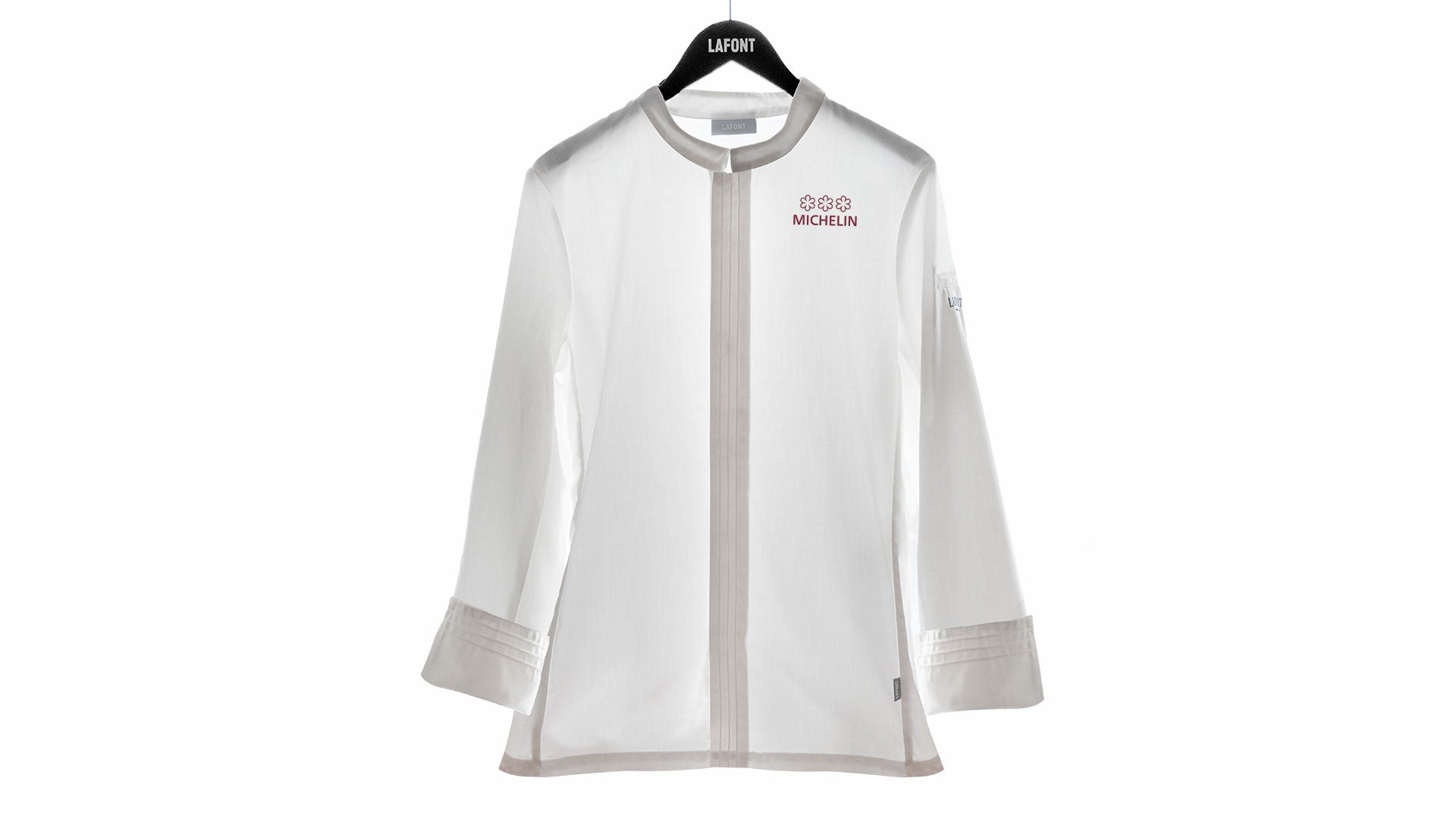
This ensures the chef feels dry rather than damp. Furthermore, Tencel possesses inherent wrinkle resistance that is a structural property of the fiber, not a chemical finish that will degrade over a wash cycle. For the "pass" in an open kitchen, garments like the Lafont CRISTAL or the Kentaur 25281 (which utilizes REFIBRA technology to reclaim cotton scraps) provide a sharp, unwrinkled drape through a six-hour shift without the need for constant pressing.
3. The 185°F Standard: The Laundry Gap
The most critical "insider" secret in apparel procurement is the wash temperature rating. There is a significant "laundry gap" between domestic care and industrial linen contracts.
Hotel and hospital laundries run significantly hotter than restaurant equipment to ensure total sanitation, often reaching 85°C (185°F). If you haven't audited your laundry contract, you may be purchasing garments destined for catastrophic failure.
The ISO 15797 standard is the hidden gatekeeper of longevity. Before selecting a high-end Tencel or fine cotton garment, compare these benchmarks:
- 40°C (105°F): Domestic/Gentle Rating. Found on high-performance blends like the Lafont CRISTAL. These require specialized care; sending them through an industrial cycle will destroy the garment's integrity within weeks.
- 85°C (185°F): ISO 15797 Industrial Rating. Found on the Segers 1603. This is engineered specifically for the high-heat cycles of industrial linen contracts, ensuring the coat survives the season.
4. Cotton is for the Pass, Not the Line
While 100% cotton remains the traditional choice for its superior "hand," it is rarely the right choice for a working line. Cotton’s primary failure mode occurs at "friction points"—collars, cuffs, and closure edges wear down and fray while the body of the coat is still intact. Furthermore, cotton is the weakest fiber for stain release; organic pigments like turmeric and red wine bind deeply into the fiber morphology.
Strategic Station Matching:
- Executive Leadership: Choose 100% cotton, such as the 215 g/m² Lafont PLATINE. Its airflow and sharply pressed appearance enhance the guest-facing presentation, as long as it receives professional laundering and care.
- Line and Prep Teams: Poly-cotton blends (like the 50/50 Lafont Lemongrass2) are the superior "working standard." They offer predictable sizing due to minimal shrinkage and superior stain release. While cheaper poly-cottons may eventually fail via "pilling," higher-quality twills maintain their professional appearance across the heat and grease of the line.
5. The "Recycled" Identity: Performance Without Compromise
A common misconception in culinary procurement is that recycled fabrics perform differently than "virgin" materials. In fact, recycled PET (polyester) is chemically identical to new polyester. A 65/35 recycled blend, such as those offered by Kentaur or Le Nouveau Chef, provides the same durability and stain resistance as conventional alternatives.
The only genuine aesthetic variable is the rise of undyed fabrics. Garments like the Le Nouveau Chef Lynn jacket, which utilizes recycled PET and lower-impact cotton, lack the artificial optical white of bleached fabrics. As "environmental math" moves from a marketing claim to a standard specification, these undyed, high-performance garments are becoming the baseline for brand-forward concepts.
The ROI of the Spec Sheet
The right fabric depends on the relationship between your kitchen’s working conditions and your laundry’s wash temperatures. In culinary operations, garment longevity is measured in industrial wash cycles; about 50 cycles typically equal one season of daily use under a linen-service program. Selecting a fabric that cannot withstand your laundry’s heat will accelerate replacement costs and reduce your return on investment.
When choosing your next chef coat, look beyond appearance. Choose a fiber that can handle both the demands of your kitchen and the temperatures your laundry uses.
Share:
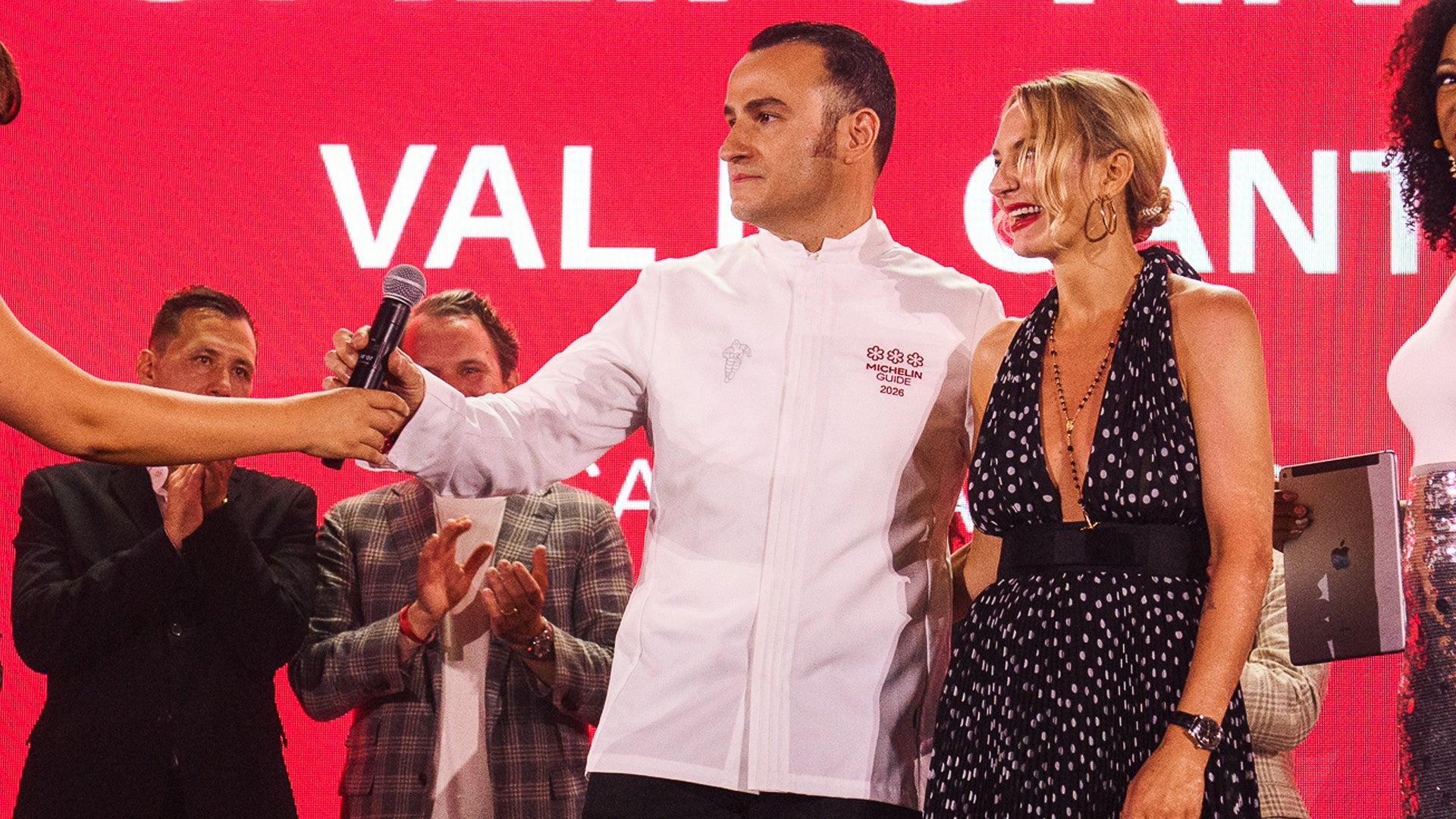
The Coat the Winners Wear: Chef Val Cantú and the CRISTAL