

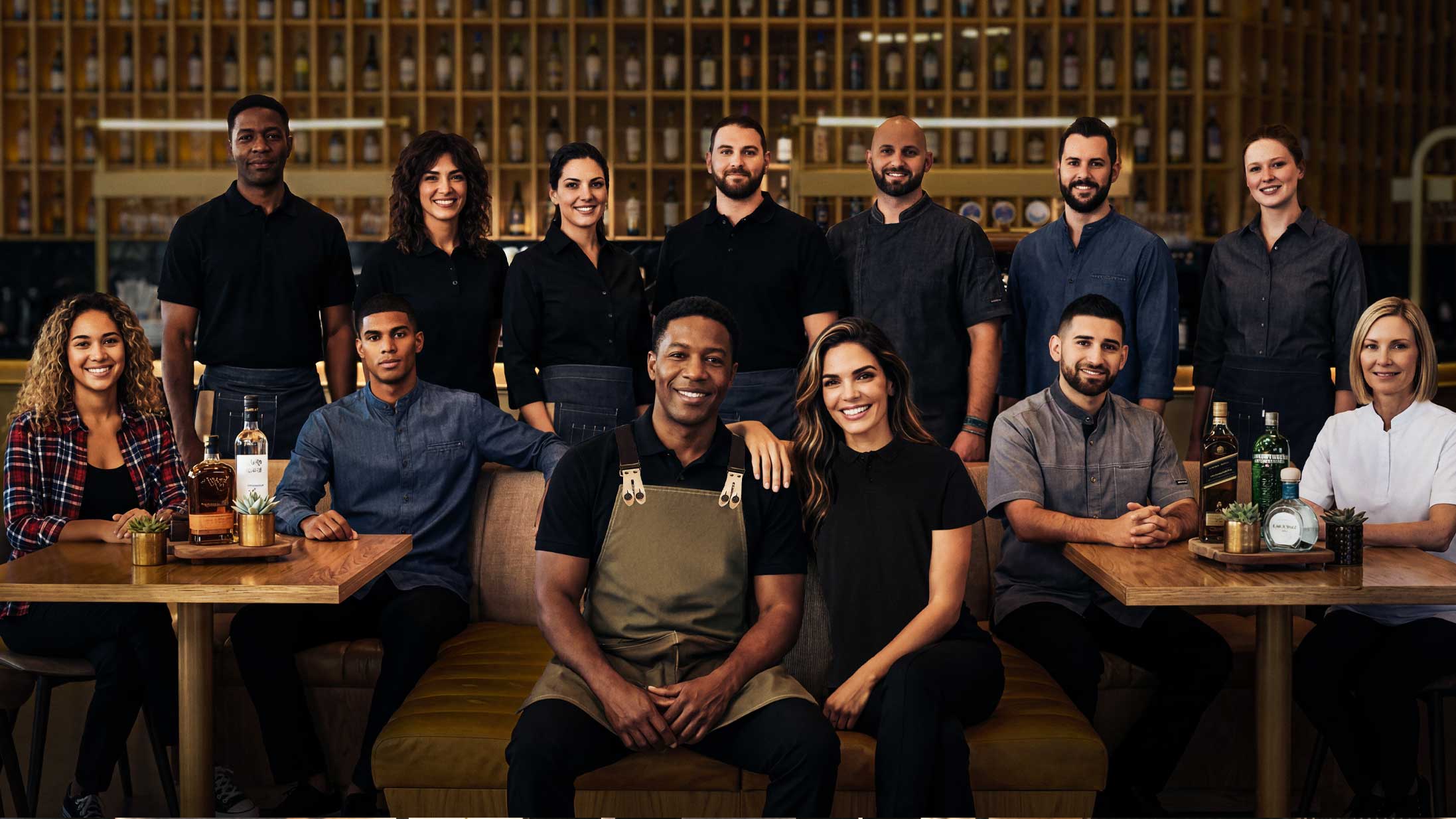
Choosing the right bartender uniform brand is rarely treated with the seriousness it deserves. Explore our top-rated bartender uniform brands with durable fabrics. We have exclusive styles that you won't find ANYWHERE else. Let us explain.
Operators focus on menu design, lighting, and cocktail programs. Apparel is often selected in a hurry. A few months later, collars fray, fabric pills, and the staff looks disconnected from the environment they serve.
Durability matters. Professionalism matters. The brand behind the garment matters more than most realize.
Fabric Quality Is Non-Negotiable Behind the Bar
Bartending is a physical profession. Movement is constant. Reaching, pouring, shaking, leaning across a long bar top. Uniforms are exposed to ice water, citrus juice, grenadine, wine, and occasional spills.
A shirt that looks clean on the hanger but loses structure after six washes becomes a liability.
The best bartender uniform brands engineer fabrics for tensile strength, colorfastness, and moisture management. They hold their shape under repeated industrial laundering. They maintain a clean drape after long service. They remain sharp enough for a five-star setting.
Look for fabrics with tightly woven construction, often polyester-cotton or polyester-viscose blends. These resist shrinkage, maintain dimensional stability, and repel surface staining. These are functional requirements, not marketing language.
The Brands That Lead the Category
Kentaur
Kentaur is a Scandinavian brand with a strong presence in professional hospitality. Their garments are engineered for long-term performance across hundreds of wash cycles.
Their fabric philosophy balances appearance and resilience. Service shirts and bartending tops include reinforced stress points at shoulders and cuffs where wear begins. Colors remain consistent. Fit remains stable. The silhouette stays professional over time.
Segers
Segers approaches hospitality apparel with technical precision. The brand has supplied demanding restaurant and hotel groups across Europe for decades.
Their polyester-dominant blends resist common bar stains such as wine, syrup, and bitters. The fabric structure allows for rapid drying, useful in high-turnover laundering environments.
Le Nouveau Chef
Le Nouveau Chef operates at the intersection of culinary and front-of-house apparel. While well known in kitchens, their service pieces are increasingly used across hospitality environments.
Their fabrics lean toward performance blends with a softer hand feel. This improves comfort during long shifts. Garments allow movement while maintaining a polished appearance.
Lafont
Lafont brings French workwear heritage into hospitality apparel. Their experience shows in cut, construction, and material sourcing.
Service garments use slightly heavier fabrics, which improve drape and create a more substantial feel. This aligns well with luxury hotel environments where texture matters alongside appearance.
What to Look For in a Bartender Uniform Fabric
Selecting a brand is one step. Selecting the right fabric within that brand is another.
Polyester-cotton blends, often 65/35 or 60/40, are the standard for bartending. Polyester supports durability and shrink resistance. Cotton adds breathability. Higher polyester content favors longevity in commercial laundering.
Polyester-viscose blends are common in European brands such as Kentaur and Segers. Viscose improves drape and comfort while maintaining color retention and quick-dry performance.
Antimicrobial and moisture-wicking finishes improve comfort and extend wear between washes. These features matter in warm, high-paced environments.
Colorfastness ratings, typically measured on a scale of 1 to 5, indicate how well fabric retains color. A rating of 4 or higher is the professional benchmark. Lower ratings lead to visible fading within months.
Aprons: The Second Layer of the Bartender Uniform
The apron is functional, visible, and essential to presentation.
Effective bar aprons use waxed canvas, heavyweight denim, or linen-cotton blends that resist liquid penetration while maintaining structure. Length and pocket design affect movement and efficiency.
In concept-driven bars and boutique hotel settings, the apron is part of the design language. It should be integrated into the uniform program rather than treated as an afterthought.
Waistcoats and Vests: Elevating the Bar Uniform
In luxury settings, waistcoats and vests define the bartender’s presentation. It adds formality without requiring a full jacket and remains practical in warm environments.
The best waistcoats use moderate-weight fabrics that hold shape without restricting movement. Proper lining ensures the garment maintains structure and lies flat during service.
Features such as adjustable back straps, interior pockets, and consistent color retention are critical for hospitality use.
The Hospitality Standard: Dressing the Full Front-of-House Team
Bartenders are part of a broader front-of-house team. Cohesion across roles shapes the guest experience.
Misalignment between bartender uniforms and other staff creates a visual disconnect. Hosts, servers, and sommeliers should reflect the same level of intentional design.
Sourcing apparel from a unified supplier improves consistency in color, fit, and overall presentation. It also simplifies operations through streamlined ordering and inventory management.
Sizing Consistency and Bulk Ordering
Sizing consistency is a persistent challenge in uniform programs. Variations between vendors or production runs create visible inconsistencies across teams.
Kentaur, Segers, Le Nouveau Chef, and Lafont maintain precise grading standards. Sizes remain consistent across orders. Measurements hold to specification.
For large teams or multi-location operations, this consistency is essential. It supports a cohesive appearance and simplifies onboarding new staff.
Bulk ordering programs that track employee sizing and centralize purchasing reduce friction in uniform management. Replacing or adding garments becomes efficient and predictable.
Making the Decision: How to Evaluate Bartender Uniform Brands
Requesting samples is a standard step before committing to a uniform program. Fabric specifications provide information, but real-world testing reveals performance.
Key questions during evaluation:
- What is the wash-fastness rating of the fabric?
- How does the garment perform after 25 industrial washes?
- What are reorder lead times?
- Is stock availability consistent?
- Does sizing remain consistent across the full range?
These factors distinguish short-term solutions from long-term partners lie us.
Final Thoughts
A bartender working a high-volume service represents a brand, an aesthetic, and a standard of hospitality. The uniform is part of that representation. It must maintain its appearance under pressure and remain sharp throughout service.
Kentaur, Segers, Le Nouveau Chef, and Lafont meet these expectations in different ways. They serve professional environments where performance and presentation are equally critical.
A strong uniform program supports consistency, reinforces brand identity, and ensures the team looks aligned with the level of service delivered.
Browse the full bartender uniforms collection at United Uniforms →
United Uniforms is the premier supplier of professional hospitality and foodservice uniforms in the United States, carrying exclusive European brands designed for the demands of modern restaurant and hotel service.


Share:
The 2026 Terrace Season Awaits! Is Your Front of House Team Ready for the Summer Spotlight?